
Dlnia Goharinejad: An Analytical Look at the Academic Standing of Iranian Universities in the World;
Reasons for Iranian Universities Lagging Behind in Global Rankings / A Drop in Academic Quality or the Rapid Pace of Higher Education Developments?



In recent months, news related to the standing of Iranian universities in global ranking systems has not been very promising; from the removal of Iran's name in the 2026 Times World Ranking, even though last year 34 Iranian universities were present in this list, to the drop in the rank of 44 universities out of 47 present in the 2027 QS Asian Ranking, with none reaching the top 100 universities in Asia! Statistics that undoubtedly create concerns regarding the future of the country's scientific competition.
However, with a closer look at the mechanism of these rankings, one cannot simply judge a drop in research quality in the country's universities merely by seeing numbers and ranks; the reality is that the high growth rate and investments of rival universities in the region, limitations in international communications, and research budget constraints in Iran carry a heavy weight in these equations and shift the final result at the global level.
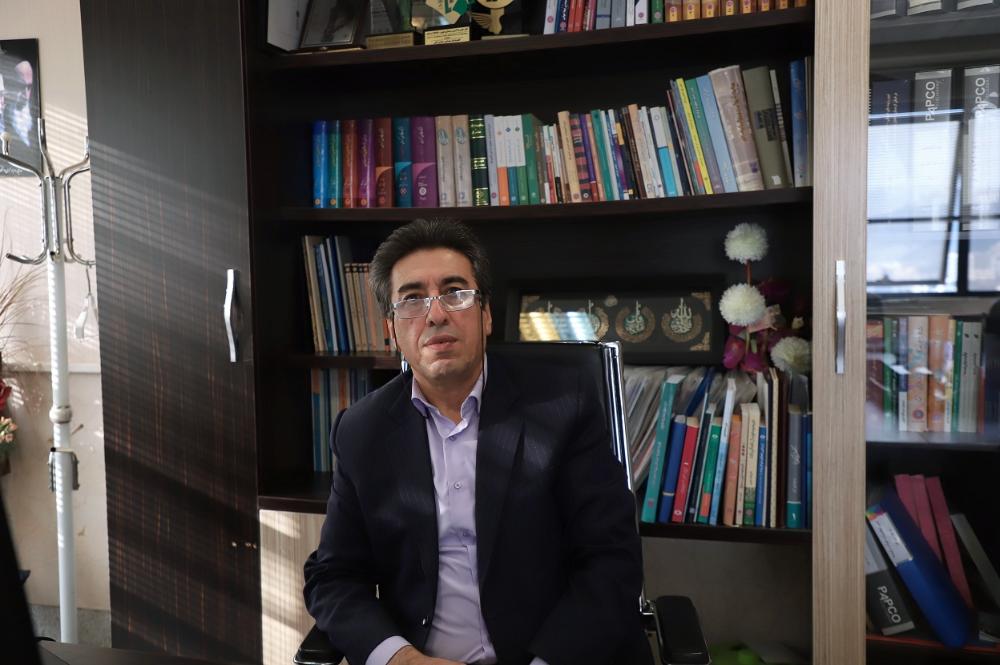
In this regard, Dr. Bahman Bahramnejad, Vice President for Research and Innovation at the University of Kurdistan, has explained the factors influencing the change in the standing of Iranian universities in international rankings, the status of the University of Kurdistan in research and technological indicators, and the programs of this university to strengthen its scientific and international standing.
Explaining the reasons for the drop in the standing of the country's universities in international rankings, especially the QS Asian ranking and the Times ranking, the Vice President for Research and Innovation at the University of Kurdistan said: "This issue can be examined from two perspectives; first, the high pace of progress of rival universities in Asian countries, the region, and the world, and second, the changes and limitations created in the performance and international competition capacity of the country's universities."
Pointing to the massive investments of universities in various countries in the field of higher education, Bahman Bahramnejad stated: "Universities in East Asian countries and even the Middle East have made significant investments in recent years in the fields of research, innovation, attracting international talents, and developing academic collaborations, a trend that has caused the growth rate of these universities to increase and every year a larger number of them enter the Times and QS international rankings; an issue that undoubtedly makes competition more difficult for other universities."
He considered limitations in scientific and international collaborations as one of the most important obstacles facing Iranian universities and asserted: "Research and technology have a networked nature and take shape within the context of international communications among universities, research institutions, and researchers. Meanwhile, sanctions, difficulties in financial transfers, problems related to sabbatical opportunities, and the limitation of scientific communications among faculty members have faced the international collaborations of the country's universities with difficulty."
Bahramnejad further enumerated limitations in financial resources and research infrastructure as other factors affecting the reduction of Iranian universities' competitive power, saying: "The decline in purchasing power for laboratory equipment, the increase in the cost of research services, obsolescence, and the difficulty of importing new equipment all impact the quality of research and the impact factor of the universities' scientific activities."
According to the Vice President for Research and Innovation at the University of Kurdistan, the migration of elites and the decline in the retention of specialized human capital are also other serious challenges facing the country's higher education; because in recent years, a large number of faculty members, young researchers, and talented students have migrated from the country, such that according to statistics, it is said that if the articles of Iranian researchers who have migrated out of the country are also included in the calculation of Iran's scientific outputs, the country's scientific standing at the global level will not only not drop, but will also experience significant growth.
He also considered weakness in the internationalization of universities alongside these effective factors, adding: "In the field of developing joint educational and research courses and establishing effective communication and interaction with foreign universities, we have not acted as successfully as we should have, and on the other hand, the share of research, development, and R&D from the country's budget is also far from the desirable situation."
Emphasizing the importance of the share of research and development from the gross domestic product, Bahramnejad stated: "This share in our country is about 0.7 percent, while in developed countries it reaches over 6 percent; for example, this figure is close to 5 percent in South Korea, about 4 percent in the US, and about 6 percent in the Zionist regime, which undoubtedly such a difference in the amount of investment has a significant impact on the quality and effectiveness of research and ultimately the competitive power of universities."
A Drop in the Country's Rankings Does Not Necessarily Mean a Drop in University Quality
In response to the question of whether the decline in the standing of Iranian universities in global rankings means a drop in their scientific quality, the Vice President for Research and Innovation at the University of Kurdistan emphasized the necessity of distinguishing three concepts and said: "We must differentiate between the actual performance of a university in the fields of education, research, technology, and innovation, the score the university obtains in ranking indicators, and its relative standing compared to other universities in the world, because these three concepts are not necessarily the same."
He continued: "For example, in some indicators such as the number of articles and educational and research performance, the country's universities have not only not dropped compared to previous years, but have also grown; however, we have fallen behind in competition with universities of other countries; therefore, the issue is not necessarily that Iranian universities have become weaker, but rather that in some determining components, we have not kept pace with the speed of global higher education developments."
Bahramnejad emphasized: "Despite all the mentioned factors, our universities still operate with effort and acceptable quality, but since international rankings have a competitive nature and other countries are advancing at a faster pace, the standing of Iranian universities may decline, even under conditions where their scientific and research performance has an upward trend."
Growth of Research Indicators at the University of Kurdistan Despite the Drop in Ranking Position
Describing the status of the University of Kurdistan in recent rankings, Bahramnejad said: "Like many universities in the country, the University of Kurdistan has also faced a drop in standing in the two recent QS Asian and Times rankings, and the issues raised regarding Iranian universities also apply to the University of Kurdistan; nevertheless, examining the internal performance of the university shows that we have had an upward trend in the quantity and quality of research."
Pointing to the increase in the university's scientific outputs, he added: "The number of articles published by the university, especially Q1 articles which are considered one of the important indicators of the quality of scientific outputs, has increased annually, such that we witness the growth of Q1 articles in 1405 compared to 1404 and in 1405 compared to the corresponding period."
According to him, this growth is not limited to publishing articles, and the University of Kurdistan has also had an upward performance in the fields of extra-university projects, interaction with society and industry, as well as technology and innovation; nevertheless, existing limitations in publishing articles and developing international collaborations, alongside the rapid pace of progress of rival universities in other countries, have impacted the university's standing in global rankings.
Establishment of a Specialized University Ranking Task Force and Development of International Scientific Cooperation at the University of Kurdistan
Pointing to the programs of the University of Kurdistan to improve its standing in international rankings, the Vice President for Research and Innovation at the University of Kurdistan stated: "The university has not been passive in this regard and has a set of programs under execution to strengthen its scientific standing and increase its international competitive power."
He cited the establishment of a specialized university ranking task force as one of the measures taken in this regard, saying: "This task force holds meetings every two weeks, and during these sessions, ranking indicators and the university's strengths and weaknesses are thoroughly reviewed and analyzed so that more precise planning can be made based on them to elevate the university's standing."
Bahramnejad considered the development of international scientific collaborations as another priority of the university, adding: "Programs for expanding cooperation with universities and scientific centers of various countries, including China, Japan, Russia, and some European countries, are on the agenda, and alongside this, strengthening the university's connection with society and industry is also being seriously pursued, and so far, memoranda of understanding for cooperation have been concluded with a large number of organizations and companies, and joint projects and activities are being pursued."
He also cited the utilization of the tax credit capacity as one of the foreseen mechanisms to strengthen the university's research activities, saying: "We strive to use this capacity in the direction of elevating the quality and quantity of the university's researches."
Significant Growth of Projects Supported by the Iran National Science Foundation
Pointing to the increase in the University of Kurdistan's capacity to attract research financial resources from outside the university, Bahramnejad considered this issue as one of the signs of the growth of research activities and said: "In recent years, the University of Kurdistan has had a notable performance in attracting research projects supported by the Iran National Science Foundation."
Describing the statistics of these projects, he stated: "The University of Kurdistan had 5 projects in 1401, 7 projects in 1402, and 9 projects in 1403 supported by the Iran National Science Foundation, which number reached 35 projects in 1404, and by the end of Aban 1405, the number of approved university projects in this foundation has increased to 49 projects."
According to the Vice President for Research and Innovation at the University of Kurdistan, the total budget of these 49 projects is about 19 billion Tomans, indicating the university's growth in attracting research financial resources and utilizing extra-university capacities.
He also announced the attraction of appropriate credits from the Vice Presidency for Science, Technology, and Knowledge-Based Economy of the Presidency and the Research Vice-Deanship of the Ministry of Science, adding: "These credits have been attracted with the aim of elevating the quality and quantity of the university's research activities; furthermore, financing research from other sources is also being pursued so that we can maintain and strengthen the trend of growth and quality of the university's scientific outputs."
University of Kurdistan Among the Five Universities with an Employment School
The Vice President for Research and Innovation at the University of Kurdistan further pointed to the university's programs in the field of technology development, innovation, and entrepreneurship, saying: "Over the past year, appropriate measures and programs have been implemented in this field, among which launching the employment school is one of the most important."
Stating that the University of Kurdistan is among the five universities in the country that have launched an employment school, he added: "This school has started its activity over the past year and has held various courses and programs for students and alumni."
Bahramnejad also introduced the growth and innovation center of the University of Kurdistan as one of the modern growth centers of the country, saying: "Currently, 20 modern growth centers are active in the country, and the growth center of the University of Kurdistan is among these centers; in this regard, memoranda of understanding have been concluded with the provincial Science and Technology Park, the provincial Research and Technology Fund, and the Technology Vice-Deanship of the Ministry of Science, and necessary programs are under execution to elevate the activities of this center."
Pointing to the measures taken to develop the university's innovation infrastructure, he stated: "Over the past year, we have attracted nearly 30 billion Tomans from the Presidential Science Vice Presidency to launch and equip innovation spaces and the university's growth center, which credit provides a suitable groundwork for developing the activities of this complex."
Increase in Grade "A" Journals at the University of Kurdistan
In another part of his remarks, Bahramnejad pointed to the status of scientific journals at the University of Kurdistan and said: "Currently, we have 18 active journals at the university, of which six journals succeeded in obtaining grade 'A' this year; whereas last year only one university journal managed to obtain this rank."
He considered this increase as the result of planning to elevate the quality of journals and added: "We have planned for the next year that four university journals enter the Scopus database and receive international indexing; moreover, scientific and executive standards for all university journals are being elevated so that in future years both the number of grade 'A' journals increases and more journals are indexed in prestigious international databases such as Scopus and Web of Science."
Revision of the University Publishing Bylaw and Development of Book Supply on Online Platforms
In conclusion, the Vice President for Research and Innovation at the University of Kurdistan pointed to the measures taken in the field of publication and university presses and said: "The university's publishing bylaw has been completely revised, and with the aim of elevating quality and standardizing book publication processes, necessary changes have been applied to it."
He added: "Based on the planning done, books published by the university press can be supplied on online platforms such as Taaghche so that access and reading opportunities are provided for a larger audience."
Emphasizing that the activity of the university press is not limited solely to the works of faculty members and staff, Bahramnejad noted: "Authored and research books from outside the university, especially in the field of Kurdistan studies and subjects related to the issues of the province and the region, are also reviewed and published in the university press; furthermore, students can submit their authored works for review and judgment, and upon meeting the necessary conditions, their book will also be published by the university press."

Faculty Systems

Student Systems

Staff Systems

Virtual Tour

Telephone Directory

Privacy Policy Statement
Quick Links
Electronic Services
Useful Links


University of Kurdistan, Pasdaran Boulevard, Sanandaj, Iran

Postal Code: 6617715175

Phone: +988733664600-8

Email: info@uok.ac.ir


site visit
- today:
- yesterday:
- all:
Last Update
25 Nov 2026 - 07:05:34