
Specialized Workshop on Indexing Scientific Journals Held at the University of Kurdistan; Emphasis on International Indexing Requirements
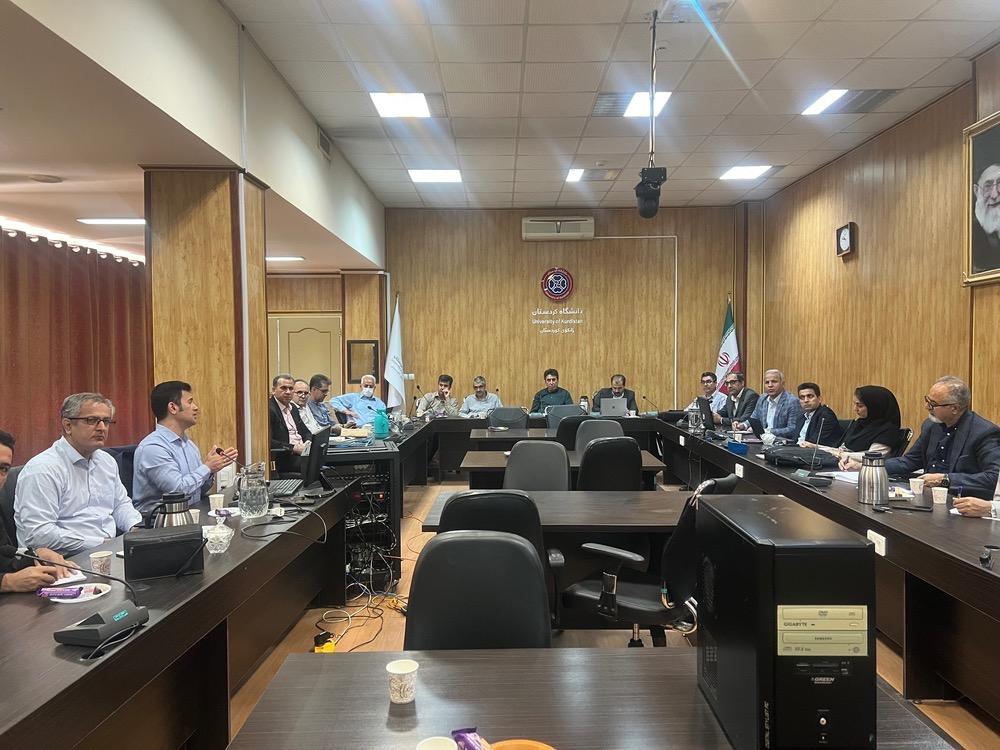



Organized by the Vice-Presidency for Research, Technology, and Innovation, the workshop was held at the Central Library Conference Hall, focusing on enhancing journal quality and streamlining the process for obtaining international credentials, particularly Scopus. The event was attended by managing directors, editors-in-chief, and executive staff of the university's scientific journals.
At the commencement of the workshop, Dr. Ghader Mirza-Ghaderi, Director of Research Affairs, welcomed the participants and highlighted the critical role of indexing in scientific evaluation systems. He introduced the workshop instructor, Dr. Alireza Noruzi, a prominent expert in journal indexing, describing the event as a practical step toward achieving the university's internationalization goals.
Subsequently, Dr. Bahman Bahramnejad, Vice-President for Research, Technology, and Innovation, elaborated on the necessity of indexing scientific journals. Citing the "increasing international competition in scientific publishing," he emphasized: "Today, possessing reputable indexes such as Scopus and Web of Science is not merely a competitive advantage but a prerequisite for the survival and impact of scientific journals."
Referencing directives from the Ministry of Science, Research, and Technology, Dr. Bahramnejad stated: "The Ministry explicitly emphasizes international indexing for scientific journals, considering it a key performance indicator for universities." He described the acquisition of these indexes as a "vital and strategic imperative," viewing the workshop as a tangible manifestation of the university's resolve to compete globally.
A key highlight of Dr. Bahramnejad’s remarks was the continuous and dynamic nature of the indexing process. He noted: "Acquiring an index is not the final destination but the beginning of a permanent responsibility. Maintaining an index requires the incessant enhancement of content quality, adherence to rigorous peer-review standards, and punctuality in publication." He stressed that this responsibility is shared between the university as the parent institution and the journals' editorial boards and management.
The core session was presented by Dr. Alireza Noruzi, who adopted an academic and pragmatic approach to explain the "rationale, methodology, and modern techniques of indexing." The session covered:
-
Scopus Entry Criteria: Dr. Noruzi identified "regularity of publication," "geographic diversity of the editorial board," "article citability," and "adherence to publication ethics" as primary prerequisites.
-
Technical Standards and Language: The instructor emphasized the use of English for abstracts, keywords, and references, noting that even Persian-language journals must provide standardized English metadata to secure international indexing.
-
Case Studies of UOK Journals: In the final segment, Dr. Noruzi conducted an analytical review of the indexing status of individual UOK journals, evaluating website structures, international board composition, international collaboration rates, peer-review duration, and citation patterns.
Operational recommendations were provided for each journal, including "revising editorial boards by recruiting international researchers," "standardizing citation styles," "ensuring timely publication," and "increasing the proportion of international contributions."

Faculty Systems

Student Systems

Staff Systems

Virtual Tour

Telephone Directory

Privacy Policy Statement
Quick Links
Electronic Services
Useful Links


University of Kurdistan, Pasdaran Boulevard, Sanandaj, Iran

Postal Code: 6617715175

Phone: +988733664600-8

Email: info@uok.ac.ir


site visit
- today:
- yesterday:
- all:
Last Update
24 Aug 2026 - 10:02:07